
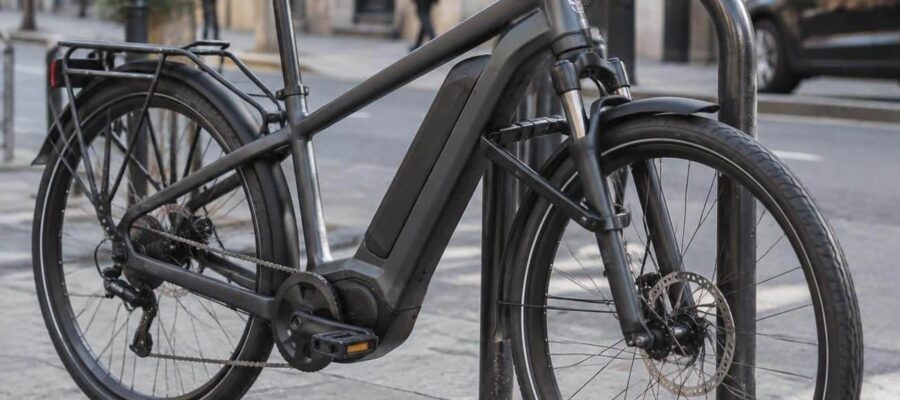
In brief:
- A standard electric bike limited to 25 km/h with a motor rated at no more than 250 W does not need separate insurance to ride in France, but third-party liability should still be checked in your home insurance policy.
- For an electric bike worth more than €2,000, dedicated cover can protect against theft, breakage, and accidental damage, which home insurance often excludes away from the home.
- The bike insurance excess, depreciation rules, and lock requirements can matter more than the monthly premium itself.
- Prices vary according to bike value, cover level, and policy structure: available examples range from around €10 to more than €16 per month for a €2,500 e-bike.
Electric bike insurance above €2,000: what the law says
Before taking out electric bike insurance, it is important to identify the exact category of bicycle you own. A standard e-bike is treated like a bicycle if its motor does not exceed 250 watts, the assistance cuts out once the rider reaches 25 km/h, and the motor only works while pedalling. For this type of model, specific insurance is not mandatory in France for private use.
That said, the absence of a legal requirement does not mean every risk is covered. Third-party liability included in a comprehensive home insurance policy may compensate damage caused to someone else, for example if a cyclist hits a pedestrian. It is still wise to check the policy wording carefully, because exclusions, professional use, and the circumstances of an accident can all affect whether cover applies.
The situation changes for a speedbike, also called an S-Pedelec, whose assistance can reach 45 km/h. This vehicle is classified as a moped and must comply with the rules for that category, including registration and compulsory insurance. Confusing a standard e-bike with a faster model can therefore have serious consequences during a police check or after an accident.
A non-mandatory policy, but a valuable asset to protect
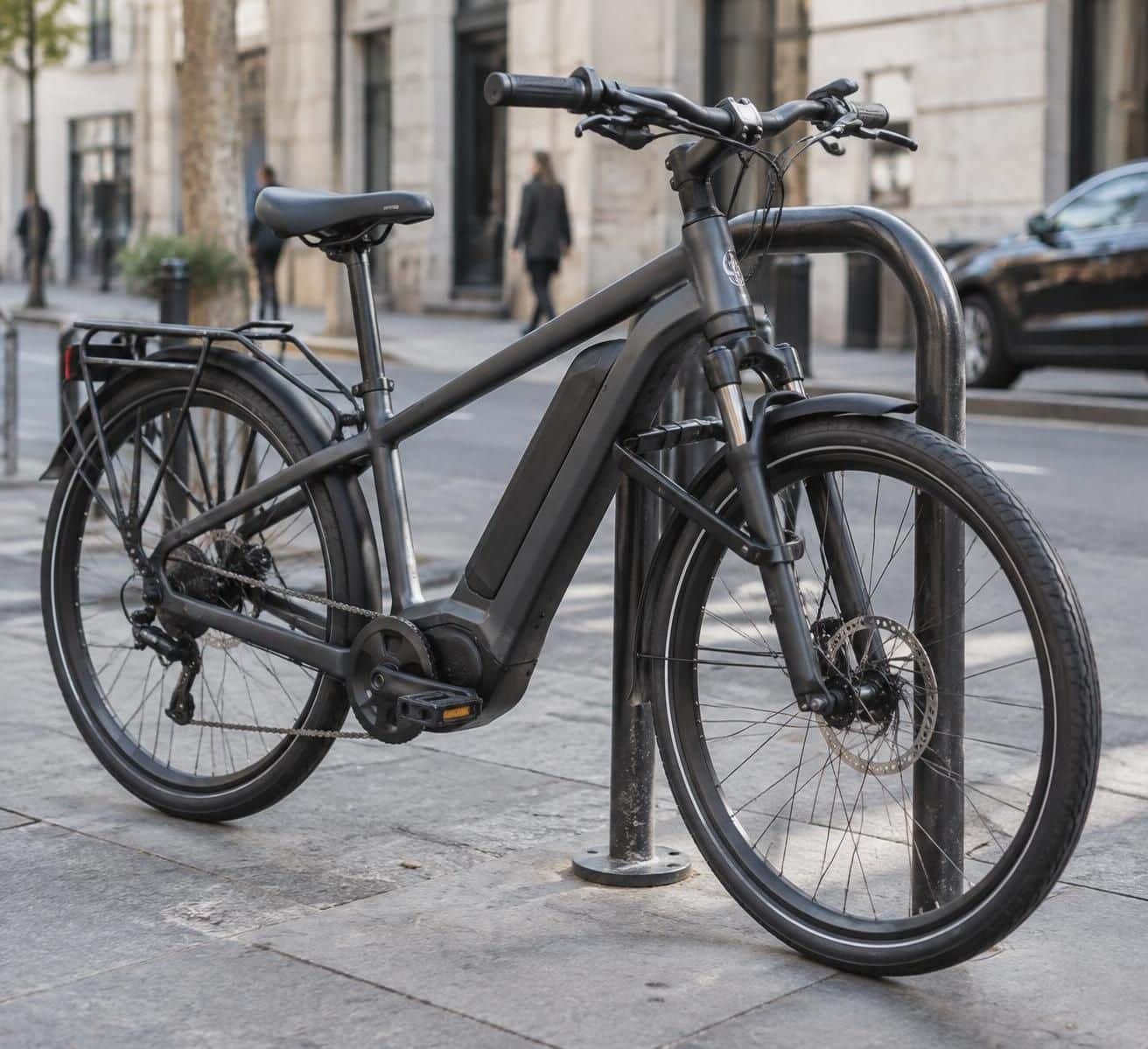
A high-end electric bike can cost several thousand euros. Losing a bike bought for €2,700 is hard to absorb, especially if home insurance only covers it inside the home, in a locked garage, or under specific conditions. A dedicated policy can extend protection to outdoor parking, depending on the wording of the contract.
Take Nora, for example. She uses her e-bike to commute to work and parks it outside her office every day. Her liability may be covered by home insurance, but that does not mean the bike itself will be reimbursed if it disappears in the city. She needs to distinguish between cover for harm caused to others and cover for her own property.
Professional use also needs particular attention. A bike used for deliveries or within a self-employed activity may fall under different conditions from a purely private commute. Before riding, it is better to ask the insurer for written confirmation rather than assume that a home policy automatically extends to that use.
Home insurance rules can also change as homes become more connected. To understand why it is useful to re-read the guarantees and exclusions in a policy, it can help to consider how connected devices affect home cover. The key reflex remains the same: ask clearly whether the bike is covered away from home and under what circumstances.
Theft, damage, and liability: the covers that matter for an e-bike
Theft cover is often the first thing owners look for when they buy an electric bike worth more than €2,000. However, the conditions need careful reading. Some policies require a certified lock, fastening the frame to a fixed point, parking the bike in an authorised location, and sometimes even presenting the purchase invoice for the lock. A policy that advertises generous compensation is useless if the insured cannot prove that these requirements were met.
Theft may be covered only when the bike is locked outside, or also when it is stolen from a private storage area after forced entry. Some contracts distinguish between total theft and theft of a component, such as the battery or a wheel. Yet on an e-bike, the battery, motor, and control display are expensive parts, so it is essential to check whether partial theft and vandalism are included, as well as the indemnity limit for accessories.
Breakage cover applies after a sudden event, such as a fall or collision, if those situations are included in the policy. Accidental damage insurance can pay for repairs to the frame, battery, or motor, subject to an excess and possible wear-and-tear limits. It does not replace a manufacturer warranty covering a production defect, and it does not necessarily cover routine maintenance.
Assistance, accessories, and reimbursement: read beyond the policy title
Assistance can be very useful when a breakdown leaves the cyclist stranded far from home. Depending on the offer, it may include towing the bike to a repair shop and returning the rider, sometimes by taxi. A flat tyre or a flat battery does not automatically trigger this service: you need to check the covered causes, minimum distance threshold, and territorial limits.
Accessories also deserve separate attention. A child seat, GPS unit, panniers, or trailer is not always included in the insured value of the bike. Some policies require these items to be declared at the time of subscription and backed up with purchase receipts. If the equipment is removable, it may be excluded from reimbursement when stolen separately.
Replacement value ultimately determines what the insured will receive after a claim. New-for-old reimbursement can be more favourable than a payout reduced by depreciation, but the duration and conditions vary. For example, one policy may preserve the purchase value for a set period and then apply a monthly reduction. For a bike that is several years old, that difference can matter more than saving a few euros per month.
Before comparing offers, it is therefore useful to separate the risks: total theft, partial theft, breakage, third-party damage, and assistance. That approach avoids paying for options that are not very useful while discovering, after a claim, that the battery or usual parking arrangement was not covered.
Electric bike comparison: price, excess, and replacement value
An insurance comparison for electric bikes should look at the guarantees alongside the real cost, not just rank policies from cheapest to most expensive. Premiums depend on the declared value, the city, the covers selected, and the excess level. The examples below are indicative figures for certain policies, not guaranteed quotes: the final price must be checked at the time of subscription.
For an e-bike valued at €2,500, available examples show around €10.39 per month with Hepster and €16.68 per month with Laka, based on a Laka tariff calculated in Lyon. Bicytrust offers policies starting at €9.90 for the Zen plan and €10.90 for the Protect plan, but the price depends on the bike’s value and acceptance conditions. These policies do not necessarily cover the same situations.
| Provider | Stated distinguishing features | Points to check |
|---|---|---|
| Bicytrust | Plans starting at €9.90, no excess advertised, assistance, and theft or damage options depending on the plan. | Maximum age accepted depending on the plan, certified lock requirement, and annual limit for partial theft or vandalism. |
| Hepster | Example of €10.39/month for a €2,500 electric hybrid bike, second-hand bikes accepted, and no wear-and-tear deduction advertised. | Choice of 0% or 10% excess, possible waiting period for an older bike, and approved lock requirement. |
| Laka | Example of €16.68/month in Lyon for a €2,500 electric hybrid bike, no excess advertised, and a flexible policy structure. | Price linked to location and level of cover; the bike and accessories must be declared accurately. |
| Sharelock | Worldwide cover indicated and possible protection for declared fixed accessories. | Bike less than five years old at the start, 10% excess advertised, and lock invoice required. |
| Ulygo | New-for-old value during the first two years according to the stated conditions. | Bike less than four years old at subscription, then depreciation and possible excess. |
| Cyclassur | New or used bikes bought from a professional under certain conditions. | Monthly depreciation capped and excess dependent on the bike’s value. |
The differences in reimbursement become very concrete after a theft. A 10% excess on a €2,000 payout leaves €200 to be paid by the insured, while a zero excess avoids that deduction, provided the claim meets the policy conditions. Likewise, wear-and-tear depreciation can significantly reduce compensation for a bike that has been used for several years.
It is also important to check the accepted age of the bike at the time of subscription. Some policies impose an age limit, while others accept used bikes without a stated maximum age. An owner who keeps a bike for a long time may prefer the absence of depreciation and a suitable coverage period rather than an attractive introductory price.
To make the comparison useful, ask for several quotes using the same declared value, the same guarantees, and a comparable excess. Also check whether accessory costs, the battery, and post-breakdown transport are included. In this way, the monthly premium becomes one decision factor among others, not the only one.
Locks, electric bike excess, and exclusions to examine
In theft claims, the lock is often the deciding factor. Many insurers require an approved or certified model from recognised bodies or labels, with minimum standards that vary from one policy to another. It is therefore not enough to buy a sturdy lock: the exact reference must satisfy the insurance clause, and the receipt should be kept.
The way the bike is secured matters just as much as the model. A lock may be rejected if only the wheel was secured, if the bike was not attached to a fixed point, or if the lock was not closed in the way required by the policy. To reduce risk, some cyclists combine a U-lock and a chain, attach the frame to a solid stand, and remove the battery when it can be detached.
The electric bike excess is the portion of the claim that remains payable after compensation. It may be fixed or calculated as a percentage, sometimes with a cap. Comparing premiums alone can therefore be misleading: a cheaper policy with a high excess may cost more when a claim is made, especially for a premium e-bike.
Also examine exclusions relating to parking. A policy may limit cover in certain places, require a locked garage at night, or exclude theft without forced entry in a storage area. Read the clauses that match the places where the bike is actually kept: apartment cellar, shared garage, inner courtyard, or workplace storage.
Limits may apply to the bike itself, to accessories, or to repairs, and the insured value must match what can be justified. An original purchase invoice is the simplest proof, but for a second-hand bike the insurer may ask for a bill of sale or an estimate. If you add a battery or expensive equipment, it is better to update the file rather than assume everything is automatically covered.
Finally, the geographical area matters for trips and holidays. Some policies mainly cover France, while others extend to the European Union or worldwide. That broader mention still needs to be read carefully: maximum trip duration, excluded countries, and the conditions applying to theft abroad. Insurance that works for a daily commute is not necessarily the best choice for a long cycling holiday.
Before signing, ask for the policy terms and check the answers to three questions: where is the bike covered, which lock is accepted, and how much will you have to pay yourself? These details determine the real level of protection far more than a commercial label such as “all risks.”
After theft or damage: steps and precautions to get compensated
After an electric bike is stolen, the first step is to file a police report quickly with the relevant authorities. You must then notify the insurer within the deadline set out in the contract and send the required documents: proof of purchase, serial or marking number, bike description, and lock receipt. Deadlines and reporting rules vary, which is why it helps to know them before a claim ever happens.
A file prepared in advance makes the process easier. Keep the invoices for the bike, battery, and accessories, together with the lock references. Take photos of the bike and record its identification number; where the policy recommends it, a photo of the bike secured with the lock can also help show that reasonable precautions were taken.
In the event of damage, photograph the loss before any repair and ask the repair shop for a detailed diagnosis. Contact the insurer to find out whether an expert assessment or prior approval is needed. If the cyclist is injured or a third party is involved, the reporting steps and medical documents or witness statements may also be important, particularly for liability claims.
Prevention complements financial cover. Parking in a busy, well-lit place, using a fixed anchor point, removing detachable parts, and marking the bike all reduce risk or make identification easier after theft. A GPS tracker can help locate the bike, but it does not replace a suitable lock or the conditions imposed by the insurer.
If the bike is kept in a home fitted with connected devices such as a smart lock or alarm, those devices do not automatically guarantee reimbursement. Insurance protection always depends on the clauses in the contract and the evidence required. For home-related damage, quickly identifying the source of an incident can also matter; a guide on detecting leaks with dye or ultrasound illustrates how important a documented diagnosis can be when dealing with an insurer.
The final choice depends on the bike’s value, daily use, and your ability to meet the security conditions. For a model bought for more than €2,000, weighing the annual cost, excess, exclusions, replacement value, and battery cover makes it possible to choose a policy that is genuinely suited to the bike.
Frequently asked questions about insurance for an expensive electric bike
Is insurance mandatory for a 25 km/h electric bike?
No, if the bike meets the standard e-bike criteria: a motor of no more than 250 W, assistance limited to 25 km/h, and power only when pedalling. Liability included in home insurance may cover damage caused to others, but it does not necessarily protect the bike against theft or damage.
Does home insurance cover theft of an e-bike outdoors?
Not automatically. Some policies cover the bike only at home or in a locked storage space, and an option may be needed for theft away from the home. Check the terms and ask the insurer to confirm coverage for your usual parking locations.
How much does insurance for a €2,500 electric bike cost?
The available examples indicate around €10.39 per month with Hepster and €16.68 per month with Laka for an electric hybrid bike of that value, with different pricing conditions and zones. The actual quote depends on the guarantees, the excess, and the insured person’s situation.
Can you insure a second-hand electric bike?
Yes, several policies accept second-hand bikes, sometimes without any stated age limit. Others impose a maximum age or require a recent purchase from a professional. Proof of ownership and an estimate of value may be requested.
What do you need to provide to be compensated after a theft?
You generally need to report the theft to the police and the insurer within the required deadlines, then provide proof of purchase, the bike’s identification details, and documents relating to the lock. The exact paperwork depends on the policy.
latest posts published

Christmas Baubles: The Art of Festive and Creative Decoration

Car Parts Theft: Does Insurance Cover It?
Creole Gumbo – Callmespring: Trends and News

Best Health Insurance Plans in India in 2023: Top 10 Options
What You Should Know About the Pros and Cons of Hybrid Cars Before Buying

My company was vandalized. What should I do now?
Financial Planning: What It Means, Its Benefits, and How to Create a Financial Plan

What Are the Rules of a Condominium Owners’ Meeting?
Dark Chocolate Mousse – Callmespring: Trends and News